StrawberryOCRs - a database for open chromatin prediction in strawberry
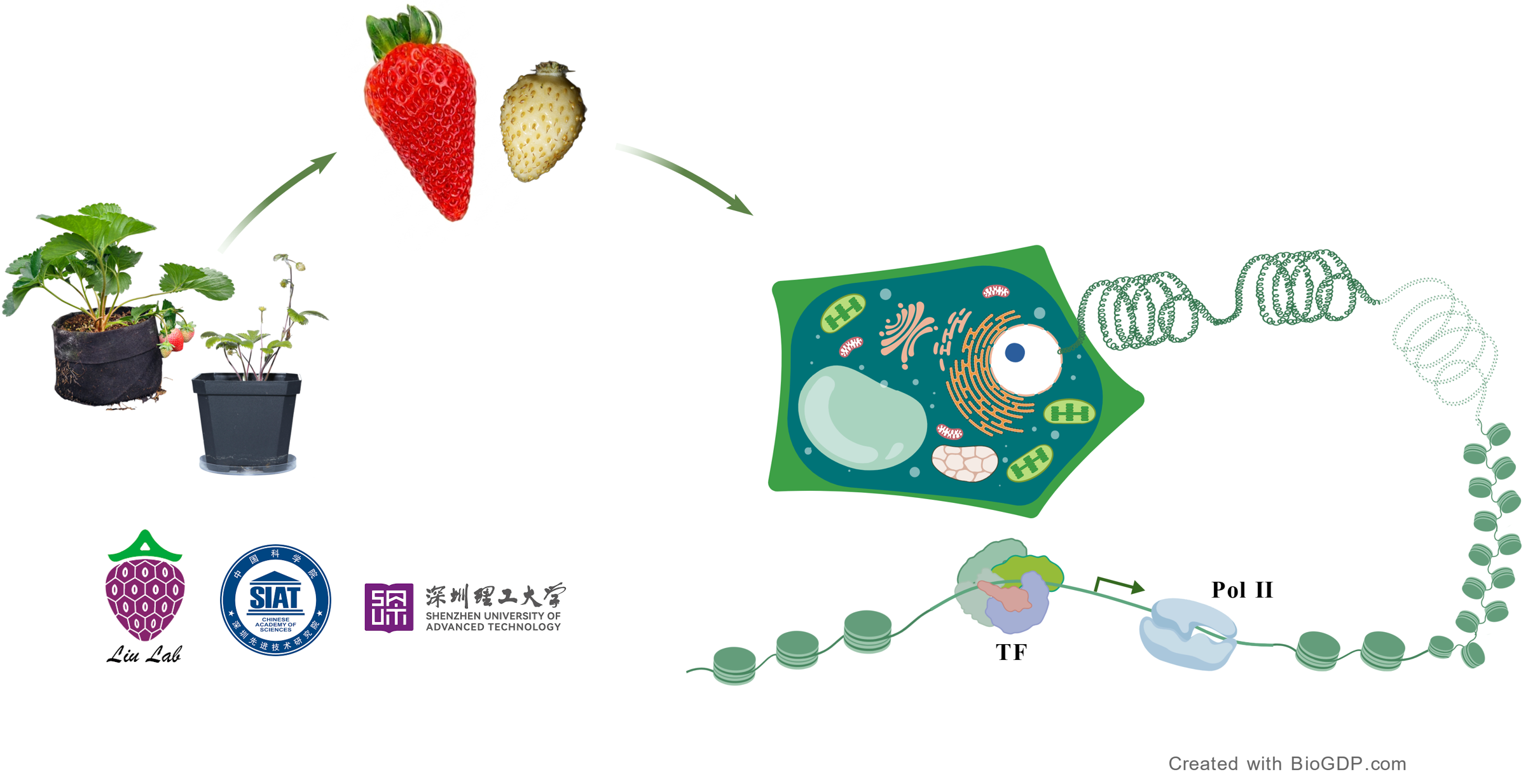
Open chromatin regions (OCRs) for Fragaria vesca genes, within 5,000 bp upstream, the first and second exons, the first and second introns, and the longest introns, were were pre-computed using a sliding window approach and the plant-dnamamba-BPE-open_chromatin model from Plant DNA Large Language Models (PDLLMs, Liu et al., 2025). These are fully searchable under the "OCR Prediction (F. vesca)" tab.
For Fragaria x ananassa, the "OCR Prediction (F. x ananassa)" tab generates real-time predictions based on user-specified gene IDs, genomic regions (upstream sequences, exons, and introns), and sliding window sizes.
For other plant species, real-time analysis is available via the "OCR Prediction (Any Plant Seq)" tab by inputting user-provided DNA sequences.
Fragaria vesca Genome Browser
Note:
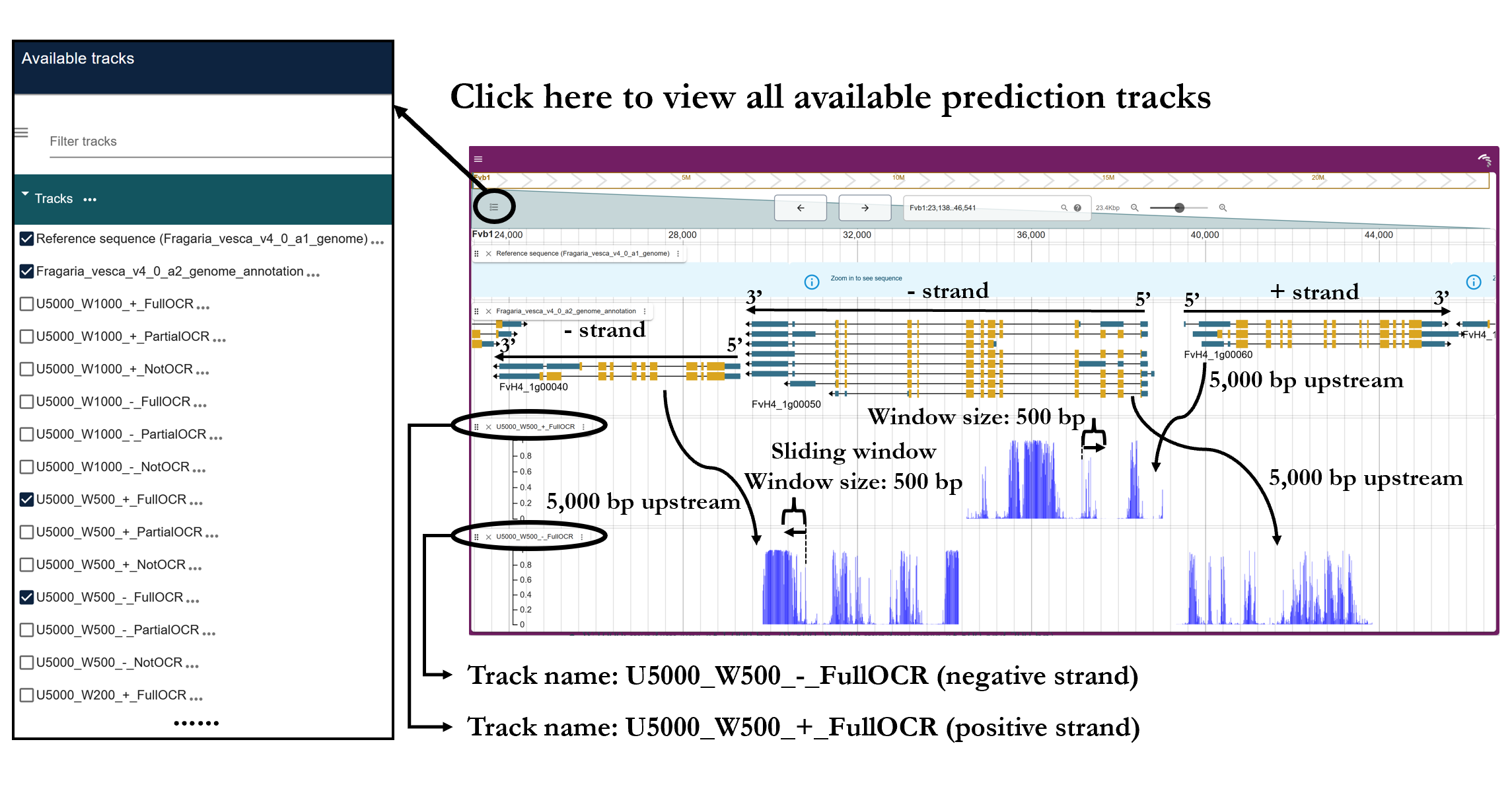
1. The OCR predictions are presented in JBrowse.
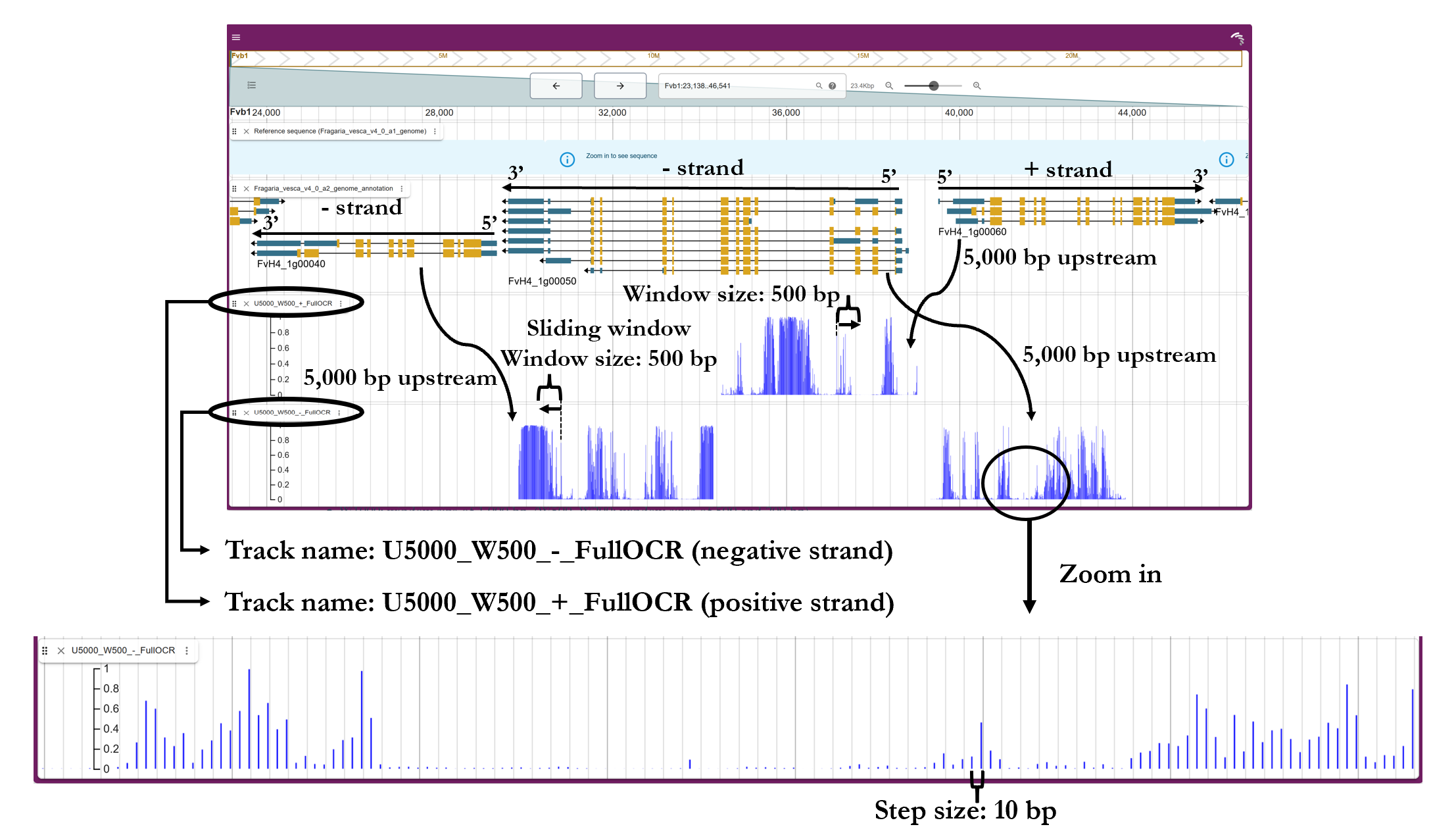
2. Example and explanation: track U5000_W500_+_FullOCR
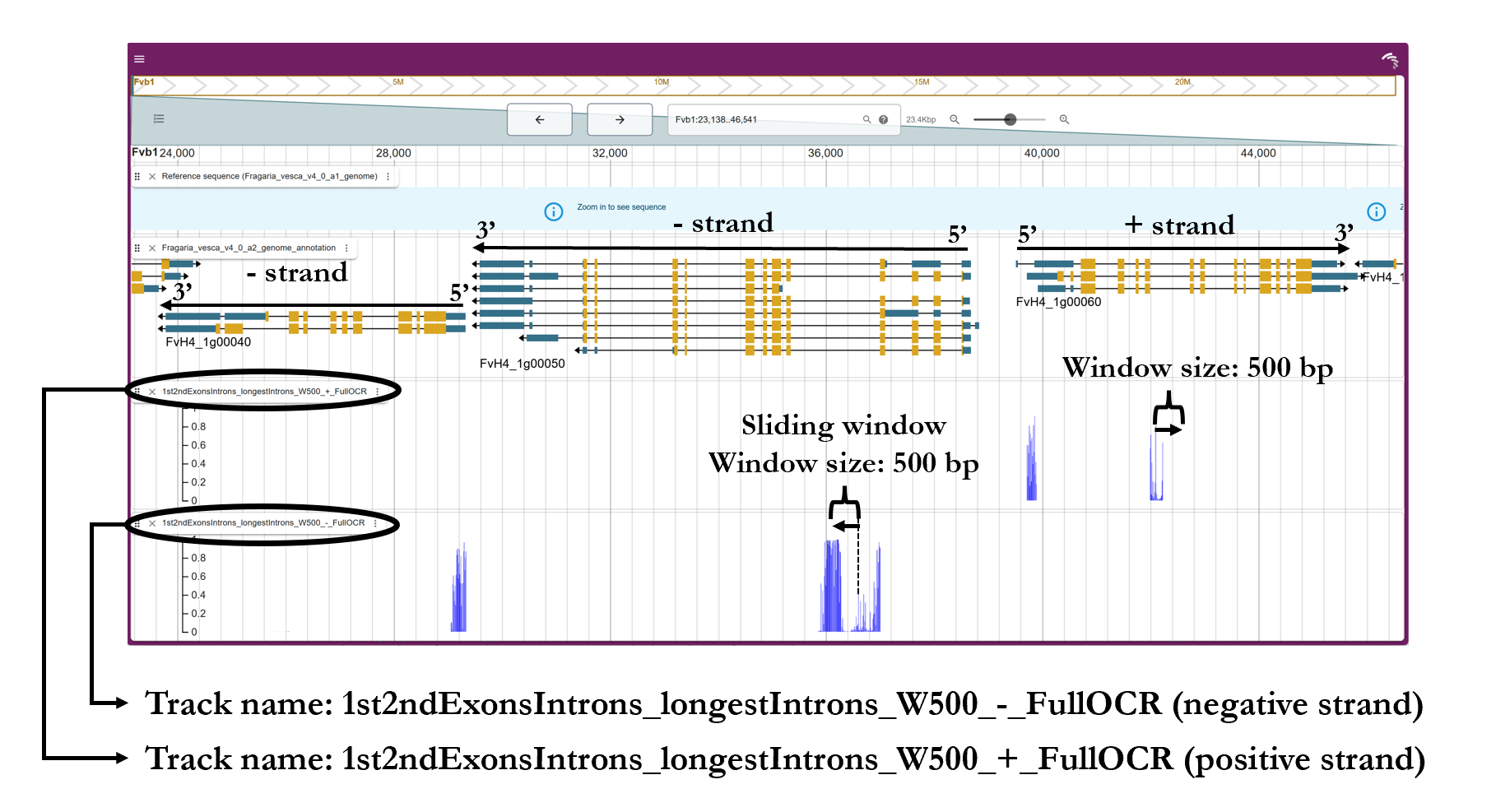
- U5000: 5,000 bp upstream of genes. (1st2ndExonsIntrons_longestIntrons: the first and second exons and introns, and the longest introns)
- W500: window size of 500 bp. (W1000, W200: window sizes of 1,000 and 200 bp)
- +: only predictions for positive-strand genes are displayed. (-: negative strand)
Each blue line indicates the predicted OCR probability of a window, starting at the line, spanning the window size (200, 500, or 1000bp), in the same direction as the gene of interest. Two adjacent lines are 10 bp apart.
Retrieve OCR probabilites per sliding window
Note:
1. The downloadable table above provides users data on the predicted probability of each sliding window being a full, partial, or non-open chromatin region. The downloaded table also contains sequences of the sliding windows.
2. Explanation of table:
Rows: each row corresponds to a sliding window.
Columns:
absolute start/end: chromosomal coordinates of the sliding window.
relative start/end:
- negative value: upstream of the gene's TSS (e.g., -5000 indicates 5,000 bp upstream of the gene's TSS)
- positive value: position of the sliding window within the feature (e.g., 1 indicates first bp of the feature).
Retrieve high-confidence OCR intervals
Note:
1. The high-confidence OCR intervals are calcuated in real time. Please allow a few moments for processing.
2. Details on OCR interval calculations can be found in the Help tab.
3. The downloaded table also contains sequences of the OCR intervals.
4. Explanation of table:
Rows: each row corresponds to an OCR interval.
Columns:
feature start/end/length: chromosomal coordinates of the selected genomic feature and its length
absolute start/end: chromosomal coordinates of the OCR interval
relative start/end:
- negative value: upstream of the gene's TSS (e.g., -5000 indicates 5,000 bp upstream of the gene's TSS)
- positive value: position of the OCR interval within the feature (e.g., 1 indicates first bp of the feature)
supporting windows: count of high-confidence sliding windows supporting the OCR interval per window size (200, 500, 1000 bp), ordered by frequency
OCR prediction for any plant sequences
Note:
OCRs are predicted in real time. Please allow a few moments for processing.
The query sequence of any plant species is scanned with chosen step size and sliding window size, and the predicted probabilites of OCRs are shown. The prediction is based on the plant-dnamamba-BPE-open_chromatin model from Plant DNA Large Language Models (PDLLMs, Liu et al., 2025). Please see the "Citation" tab to reference this work.
StrawberryOCRs database usage guidelines
1. What is PDLLMs?
PDLLMs (Plant Large Language Models, Liu et al., 2025) provides a suite of large-language-based models for predicting functional genomic elements in plants, including open chromatin regions, core promoters, and histone modification regions. Among them, the plant-dnamamba-BPE-open_chromatin model is recommended for open chromatin prediction. This model was built on Mamba, and employed byte-pair encoding (BPE) as its tokenizer. It was trained on ATAC-seq, DNase-seq, Faire-seq, and MNase-seq datasets generated from diverse plant species, tissues and developmental stages, including Fragaria vesca.
For details on PDLLMs, visit:
For more information on the plant-dnamamba-BPE-open_chromatin model, visit:
- https://huggingface.co/zhangtaolab/plant-dnamamba-BPE-open_chromatin
- https://modelscope.cn/models/zhangtaolab/plant-dnamamba-BPE-open_chromatin
To cite this work:
Liu GQ, Chen L, Wu YC, Han YS, Bao Y, Zhang T*. PDLLMs: A group of tailored DNA large language models for analyzing plant genomes. Molecular Plant 2025, 18(2):175-178
2. What is new and useful about the StrawberryOCRs database?
While the current PDLLMs online platform (Liu et al., 2025) can predict OCRs for input sequences, it only outputs the probability of the entire sequence being a full, partial, or non-open chromatin as plain text. Furthermore, these results are highly sensitive to the specific sequence provided by the user.
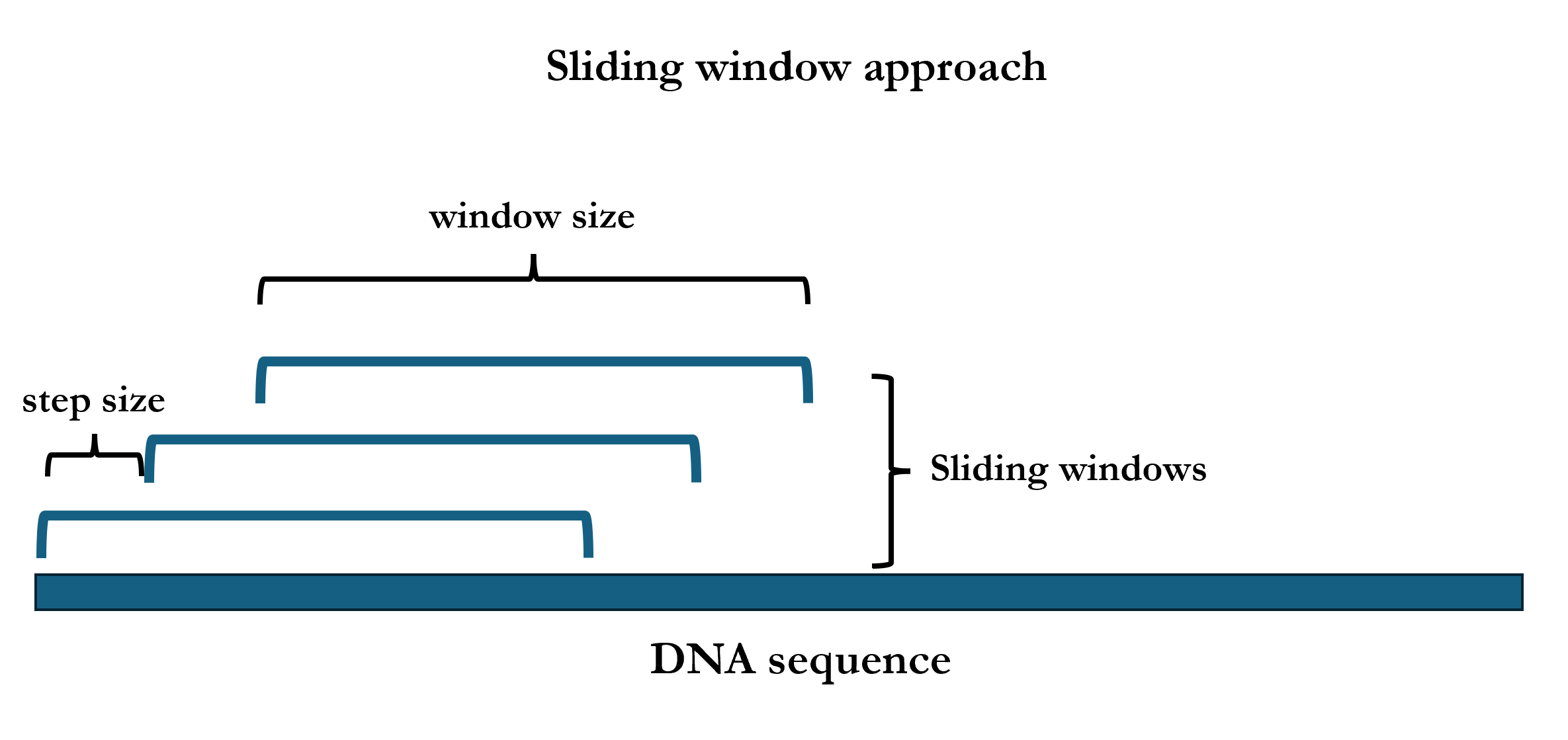
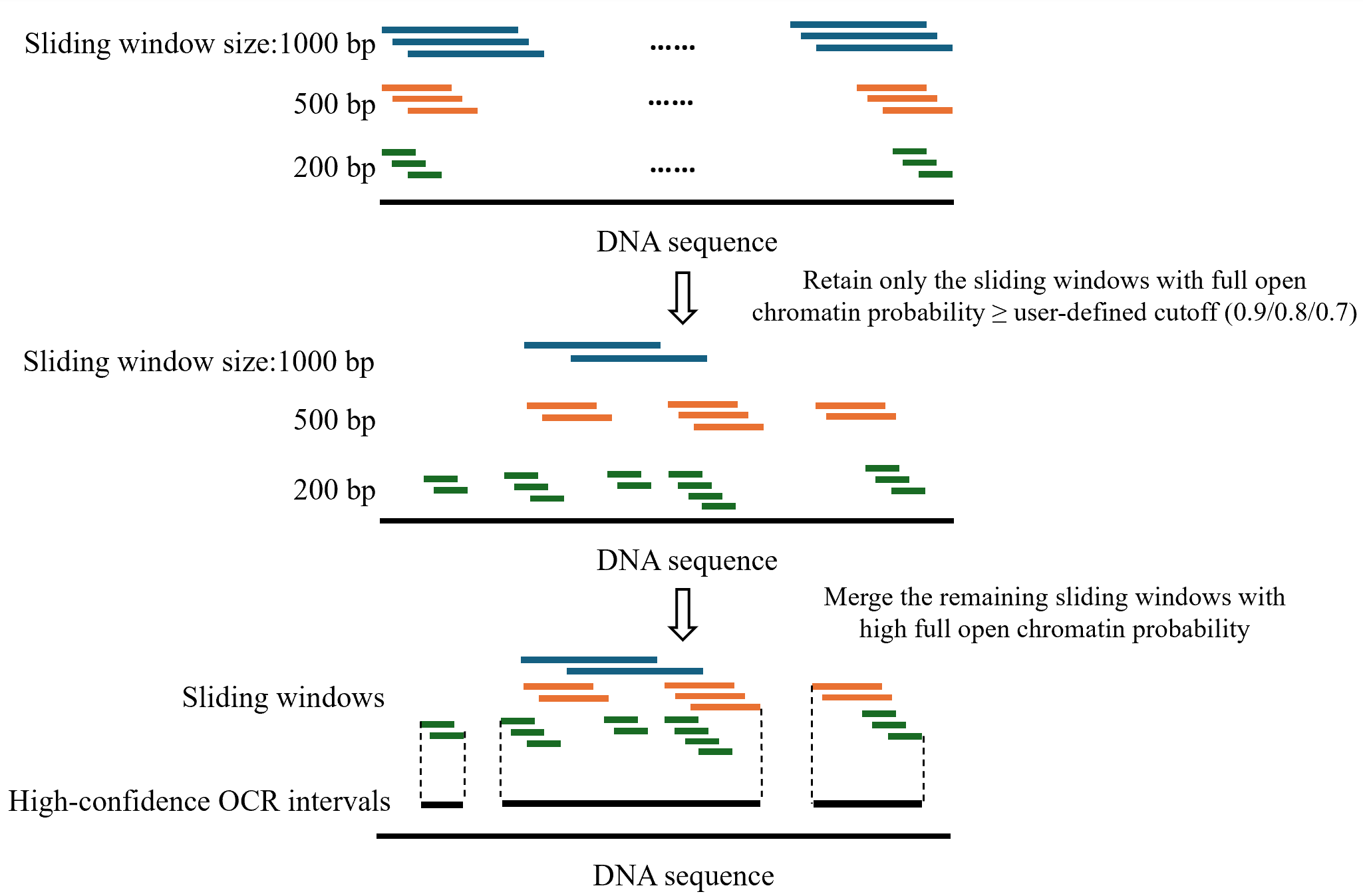
To address this, our work scans the input DNA sequence using a small step size and varying window sizes (see figure below). By reporting probability scores across multiple overlapping subsequences, this approach allows users to precisely pinpoint OCRs within the larger sequence, yielding more stable and reliable predictions. Additionally, our database offers diverse visualization options to explore these results, including scatter plots, a genome browser, gene arrow maps, and tables.
3. How were the open chromatin regions (OCRs) predicted in wild strawberry (Fragaria vesca)?
Genomic regions in wild strawberry (Fragaria vesca Genome v4.0.a2), specifically the 5,000 bp upstream of genes, the first and second exons and introns, and the longest introns, were scanned with a step size of 10 bp and window sizes of 200, 500, and 1,000 bp. For each gene, the upstream sequence was obtained from the 5,000 bp region upstream of the transcription start site (TSS) (specified in the row corresponding to the gene feature in the GFF file), and the exon and intron sequences were derived from the isoform that encodes the longest protein. if multiple longest introns existed, the one closest to the TSS was selected. The OCR prediction was based on the plant-dnamamba-BPE-open_chromatin model from Plant DNA Large Language Models (PDLLMs; Liu et al., 2025).
4. How are OCRs predicted in cultivated strawberry (Fragaria × ananassa) and other plant species?
OCRs in cultivated strawberry and other plant species are predicted using the same plant-dnamamba-BPE-open_chromatin model and sliding window logic. However, while predictions for Fragaria vesca were pre-computed, these analyses are executed dynamically in real time.
For Fragaria × ananassa (Fragaria x ananassa Royal Royce Genome v1.0, Fragaria x ananassa Benihoppe Genome v1.0 (annotation v1.0.a2) and Fragaria x ananassa Florida Brilliance Genome v1.0), users can run real-time predictions by inputting specific gene IDs, genomic regions (5,000/2,000 bp upstream, first/second exons/introns, or longest introns) and their preferred sliding window sizes.
For all other plant species, the platform supports real-time prediction based on user-provided DNA sequences and custom step and window sizes.
5. How were the homologs identified among the Fragaria species?
OrthoFinder was used to identify homologs between Fragaria vesca and each of the three Fragaria × ananassa cultivars. For each pairwise analysis, the four F. × ananassa subgenomes were treated as distinct species.
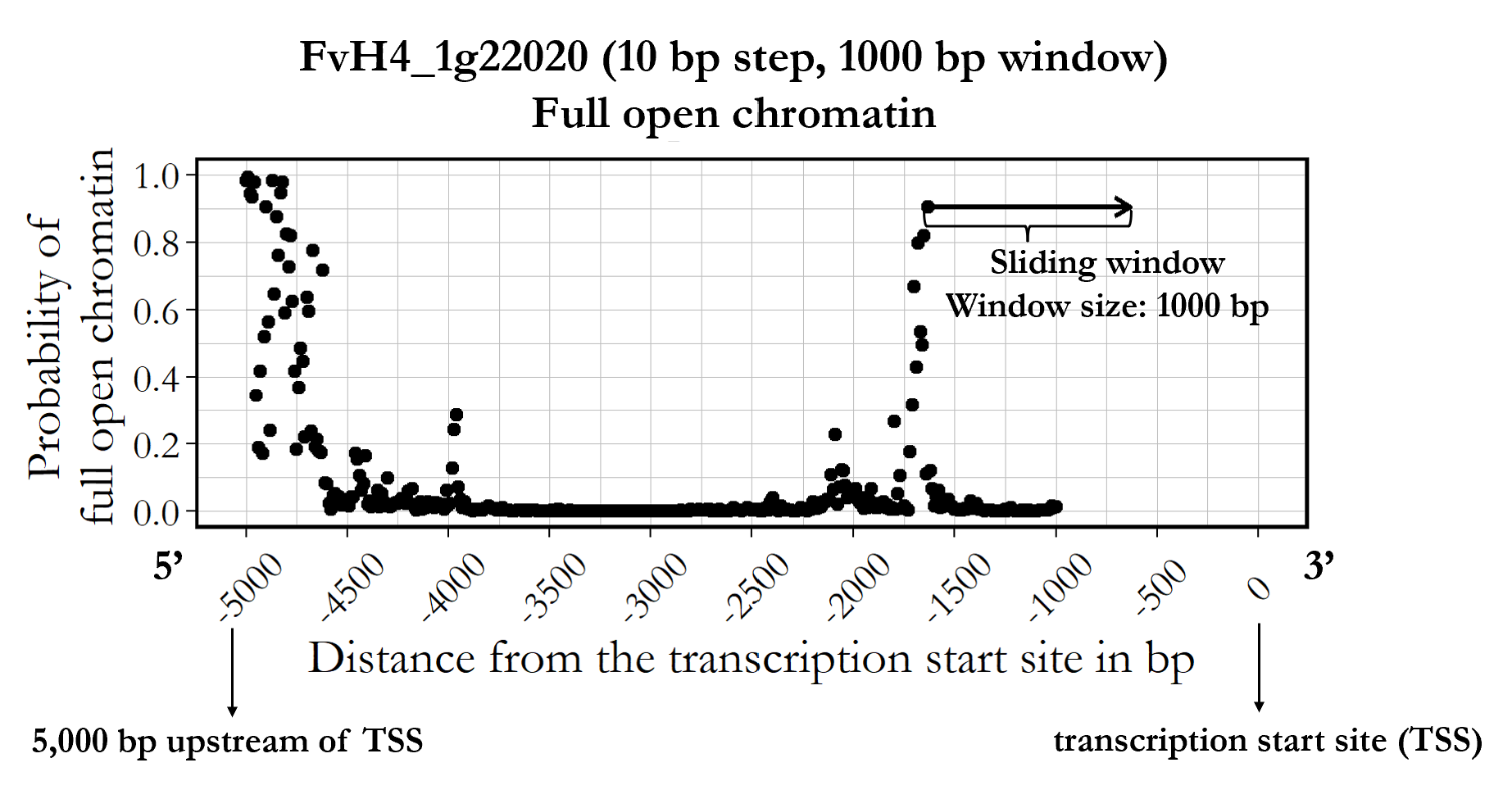
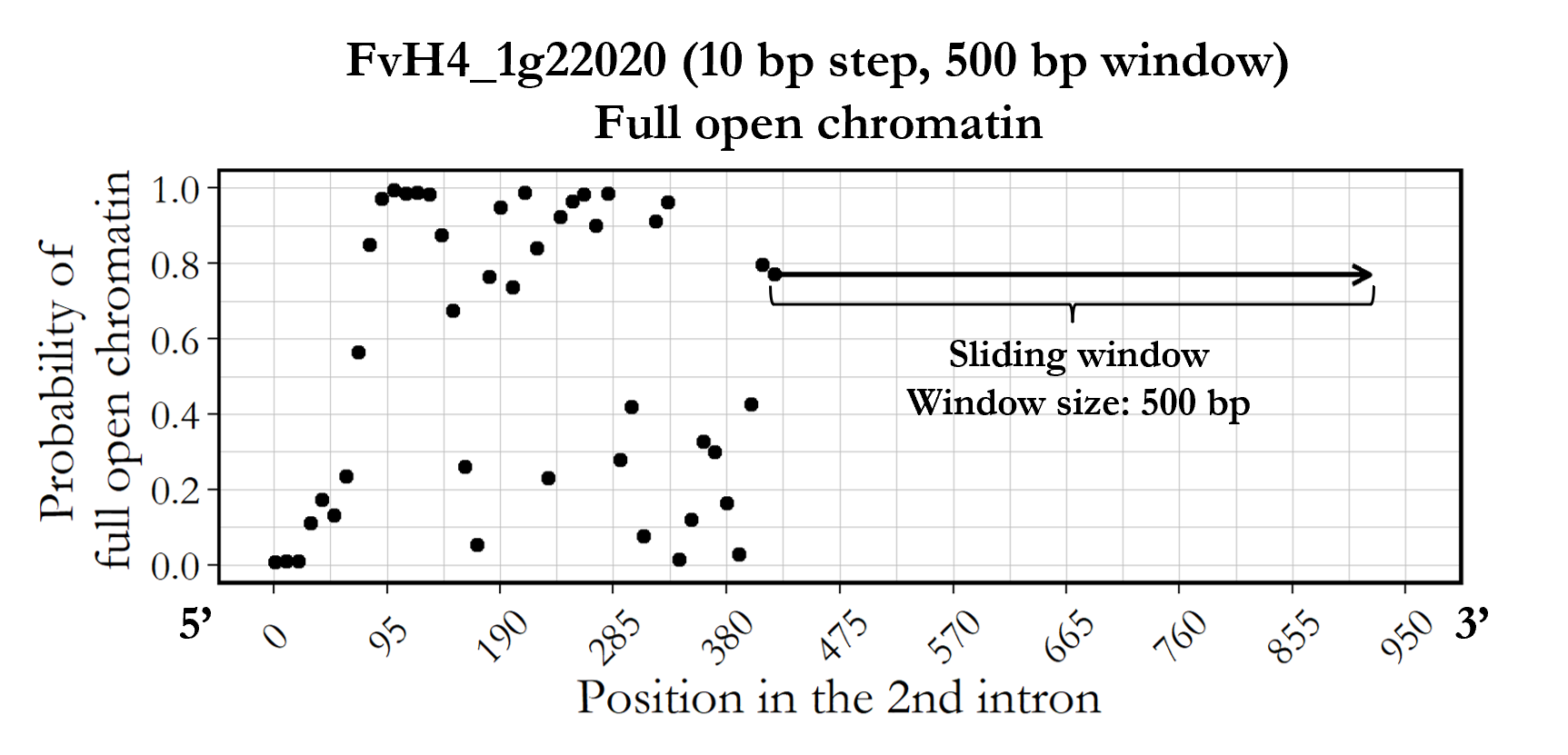
6. How do I interpret the scatter plots on the "OCR Prediction" tabs?
Examples of scatter plots from the 'OCR Prediction (F. vesca)' tab are shown below. Each dot indicates the probability of the region, from the dot extending to 3’ (see window size and arrow direction), is of full, partial, or none-open chromatin region.
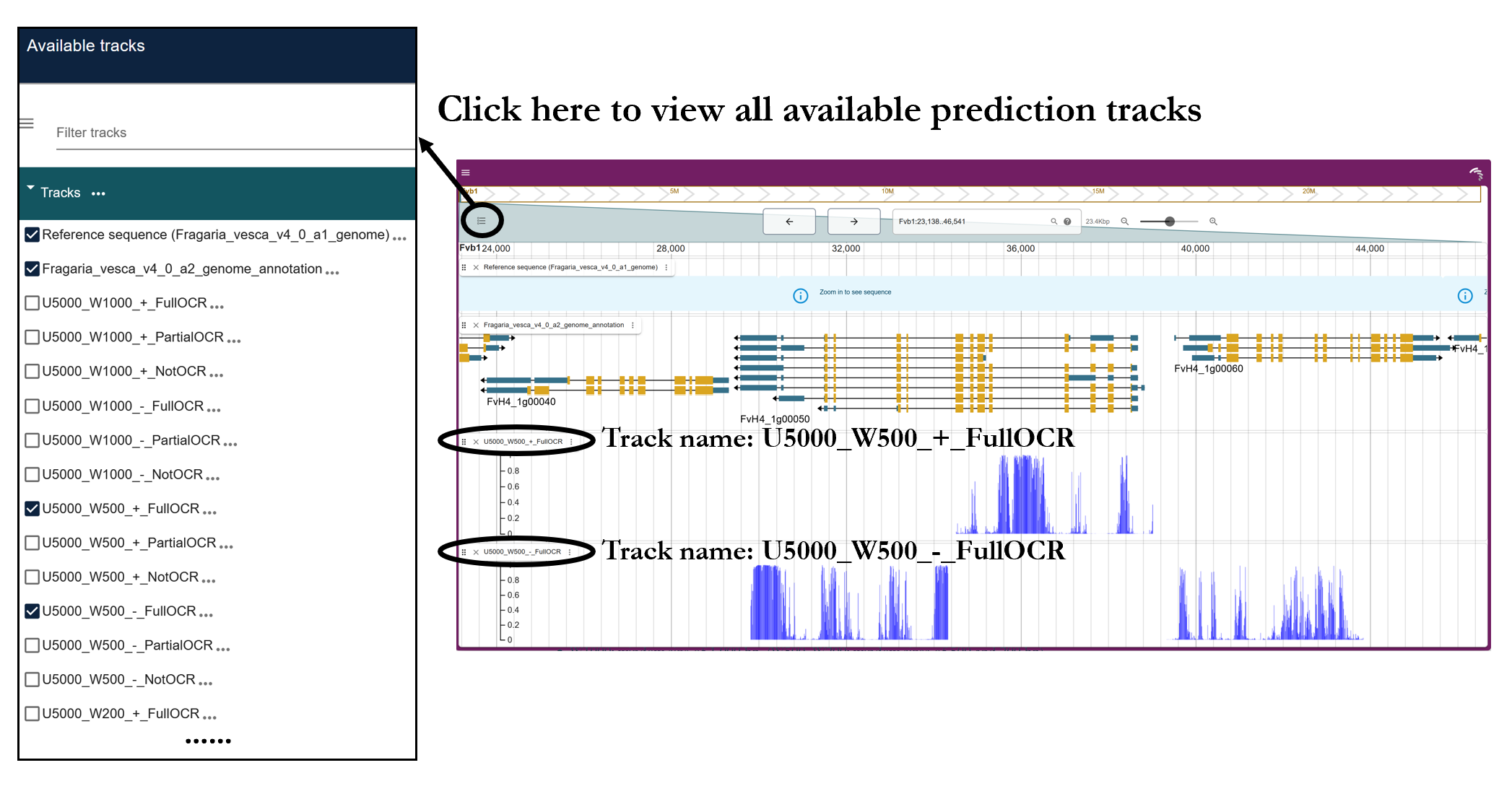
7. How do I view and interpret multiple prediction tracks in the "JBrowse" page?
How to view:
How to interpret:
8. How do I choose the sliding window size, and how are the high-confidence OCR intervals calculated?
Users are encouraged to experiment with different sliding window sizes. Reliable OCRs are typically those supported across multiple windows with consistently high full-OCR probabilities. By providing raw probability scores for each window, our platform allows users to apply their own criteria to identify high-confidence OCRs.
However, to provide a rapid automated screening tool, we feature a "OCR intervals" subtab under the "Retrieve data" tab. The high-confidence OCR intervals are calculated in real time. As illustrated in the figure below, the algorithm retains only the sliding windows across various sizes that meet or exceed a user-defined probability threshold (e.g., 0.90, 0.95, or 0.99). Overlapping windows that surpass this cutoff are then merged to form the consolidated high-confidence OCR intervals.
If you use any data from the database, please cite both of the following publications:
- StrawberryOCRs - a large-language-model-based database for open chromatin prediction in strawberry.
- Liu, G., Chen, L., Wu, Y., Han, Y., Bao, Y., & Zhang, T. (2025). PDLLMs: A group of tailored DNA large language models for analyzing plant genomes. Molecular Plant, 18(2), 175-178.
Contact
Dr. Zhongchi Liu
zc.liu@suat-sz.edu.cn
Faculty of Synthetic Biology
Institute of Emerging Agricultural Technology
Shenzhen University of Advanced Technology
Shenzhen, China 518107
GitHub